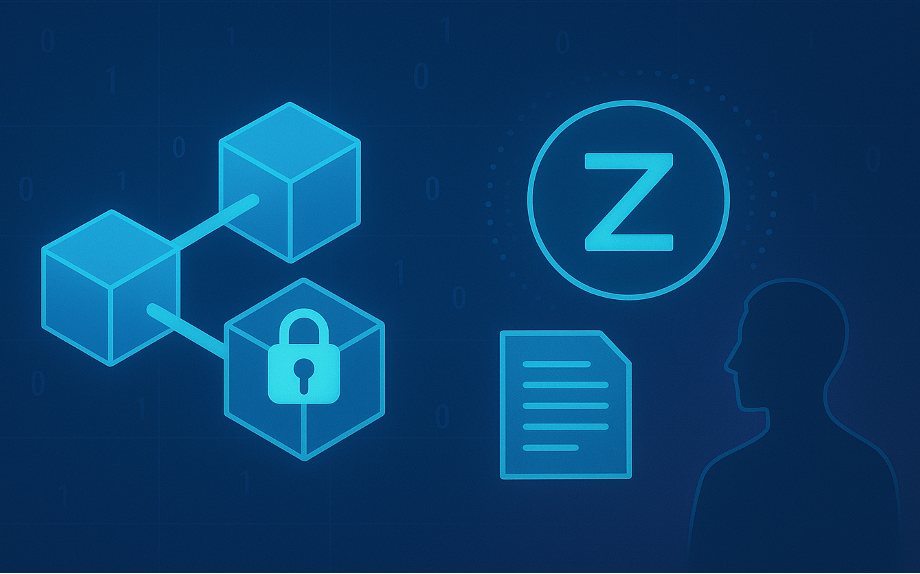
Zero-Knowledge Proofs let a party prove facts without revealing any sensitive underlying data. This technology addresses the challenge of maintaining blockchain transparency while preserving user privacy effectively. ZKPs are moving from theory into practical systems for real-world blockchain applications. They now form a base for scalable and secure decentralized apps in 2025. This advance supports the creation of trustworthy and scalable decentralized applications for modern usage.
Enhancing Blockchain Scalability via ZK-Rollups
One of the most immediate and profound benefits of ZKPs is their ability to increase blockchain scalability for Layer 1 networks like Ethereum. ZK-Rollups aggregate hundreds or thousands of transactions off-chain, generating a single, tiny cryptographic validity proof for on-chain verification. This proof is then posted back to the main chain, guaranteeing the correctness of every off-chain transaction without requiring the expensive re-execution of all data. This succinct verification process minimizes the computational load on the main network, leading to significantly higher transaction throughput and lower costs. Prominent scaling solutions like zkSync Era and Polygon zkEVM actively use different ZKP protocols, showcasing their immediate real-world utility in 2025. For example, some developers use tools like Circom and snarkJS to define circuits and generate zero-knowledge proofs. These tools help simulate and verify the correctness of proofs before they are deployed on live blockchain networks.
Delivering Confidentiality and Regulatory Compliance
ZKPs enable verification of transactions without revealing private data, which is being explored by institutions. This technology enables institutions to prove that specific rules or thresholds have been met without exposing any sensitive underlying proprietary business or client data. ZKPs can allow institutions to demonstrate proof of reserves or AML compliance without exposing sensitive customer information. ZKP privacy solutions may benefit enterprises and regulators exploring blockchain or DeFi applications Some projects are developing ZKP-based tools for privacy-preserving operations in digital services, including online gaming, prediction markets, and sports betting, ensuring that payouts and results are verifiable without exposing participants’ identities. Cryptocurrencies such as Zcash first used ZKPs to let users make fully private transactions where details stay hidden. ZKPs also help large companies use safe blockchain features while meeting all necessary data protection rules. This strong technical support allows businesses to safely enter the world of decentralized financial systems with confidence. The ability to hide sensitive data is key for wider business use of public blockchain networks.
Advancing Secure Decentralized Identity
Zero-Knowledge Proofs are transformative for the development of fully secure and sovereign Decentralized Identity (DeID) solutions across Web3. ZKPs allow users to prove specific personal attributes, such as being over 18 or a resident of a particular country, without disclosing the actual sensitive underlying documents. This method reduces data exposure risk and liability for both the individual user and the service provider requesting the verification. Verifiable Credentials protected by ZKPs can streamline various processes, from instant online onboarding to accessing restricted physical locations. For example, a user can prove possession of a valid digital driver’s license without revealing their name or date of birth to a verification application. Developers building decentralized identity systems may use ZKP frameworks like Noir or RISC Zero’s zkVM to create cryptographic circuits. This approach contributes to creating privacy-preserving and user-focused digital identity solutions, though adoption is still emerging.
New Applications in General-Purpose Computation
The latest advancements are expanding the utility of ZKPs beyond merely privacy and scalability to encompass general-purpose, verifiable computation across diverse domains. Zero-Knowledge Virtual Machines (zkVMs), like those developed by RISC Zero or SP1 by Succinct, allow developers to take any arbitrary program, written in common languages like Rust, and generate a ZK proof of its correct execution. Off-chain computations, including some machine learning or game simulations, can potentially be verified on-chain using ZK proofs. This functionality opens up possibilities for trustless data processing and verifiable oracles for smart contracts that rely on external data. For example, a gaming platform can prove that the outcome of an off-chain game simulation was fair without revealing the entire game state. Emerging ZK programming languages, such as Noir, are helping developers create new ZKP-based applications more efficiently.