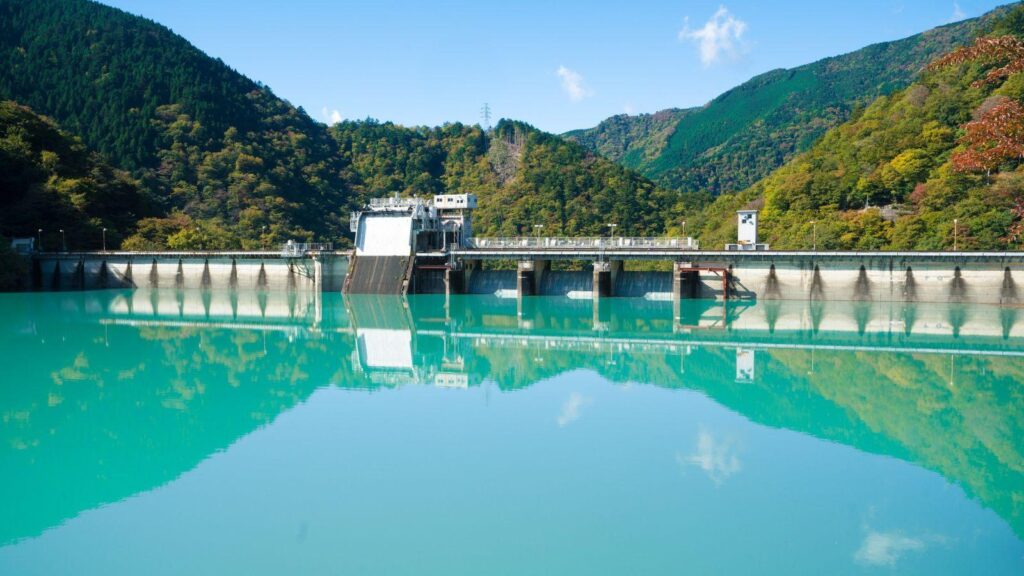
Currently, India’s total installed hydropower capacity stands at 54,480.21 MW. India has a potential hydropower capacity of around 145 GW. Clearly, India still has a huge potential to build and utilise the electricity from hydropower. It may not be growing as the other renewable energy resources, like solar and wind, but it can provide energy for long hours, which other renewable energy resources can not provide.
This article will help you understand the hydropower demand trends in India and the opportunities and constraints of it.
Key Demand Trends
The following are some of the most important demand trends in the hydropower sector.
1. Grid Flexibility and Balancing Demands
When solar output comes down during the evening or during cloudy weather, hydropower fills the gap. In the current situation, the grid is facing oversupply during midday and undersupply in the evening. Hydropower stations, especially those with good reservoir management, shift the electricity generation during the undersupply condition.
This flexibility of operation is also an important driver for long-term demand.
2. Seasonal Hydrology and Monsoon Dependency
Hydropower largely depends on the monsoon. A good rainfall during the monsoon season can make the sector look like a hero, while a weak monsoon cuts output and pushes more burden onto coal and other resources. Not surprisingly, seasonal updates occasionally move the NHPC share price.
Although hydropower operates on a much longer rhythm, markets can be impatient with seasonality.
3. Pumped Storage and Peak Power Demand
India needs long-duration storage options. Here, pumped storage plants come in. Where water is lifted to an upper reservoir during off-peak hours and released later to generate electricity. All major states are showing interest in building pumped storage.
Investors have started to notice which companies are positioned to bid for or operate these assets.
4. Policy and Market Signals
The industry is also being shaped by policy signals. The value of hydropower is indirectly impacted by transmission expansions, time-of-day tariffs, and new renewable-purchase obligations. Certain policies prioritise flexibility over raw capacity. Older hydro stations, which were previously thought of as somewhat dormant assets, suddenly appear as strategic tools for balancing a grid that relies heavily on renewable energy.
5. Capital, Compliance, and Project Delays
When FIIs turn cautious on India’s power utilities or rotate into faster-growth sectors, it sometimes softens sentiment even for stable businesses. DII flows may balance it out later, but the timing matters. Anyone tracking FII DII data week by week will notice these slight shifts. They do not always reflect business fundamentals; often, they come from global risk appetite, currency concerns, or simple portfolio rebalancing. Still, the flows can influence short-term pricing, so it helps to read them alongside sector trends rather than in isolation.
Opportunities in the Hydro Power Sector
Here are the opportunities in this sector
-
As said before, India has captured only one-third of the total potential capacity of 145 GW. India can take advantage of it by proper planning and execution.
-
Upgrading some older hydropower plants can generate some additional power at comparatively lower cost.
-
Use of modern technology for controls and predictive maintenance can improve the overall runtime.
-
Changing old turbines and installing modern, highly efficient turbines will increase the efficiency of the power plant.
Constraints in Hydropower Sector
Hydropower has some major constraints, which are listed below:
-
Building new plants is a slow and sometimes contentious process.
-
Taking environmental clearances, land acquisition can be messy.
-
Sometimes, local communities oppose large reservoir projects.
-
Geology in the Himalayan regions can throw surprises that can derail timelines.
-
Climate change, with more erratic rainfall patterns, complicates long-term water availability.
Conclusion
Even India’s hydropower industry is not growing at a faster pace, but its significance is growing due to the balancing need for solar and wind power. There are several factors that influence the demand trends, like policy decisions, financial markets, and the water cycle.
Hydropower has always been steady in operation, slow to develop, and sometimes unexpected in its strategic importance. That pattern persists, which may be why it’s still a fascinating aspect of India’s energy narrative.