Anyone managing food storage today knows that a single temperature slip can ruin a whole delivery. That is why restaurants, grocers, and distributors are leaning into low cost IoT sensors paired with blockchain logs. When these tools work together, they create a continuous, tamper resistant record of how products traveled and how cold they stayed.
The Research Angle
According to research published on ScienceDirect, sensor rich monitoring systems can make food chains more traceable and more trustworthy by giving operators clearer visibility into temperature, humidity, and handling events. This kind of data stream is ideal for blockchain because each reading becomes a locked in entry that auditors can verify without digging through messy spreadsheets.
What IoT Does Best
IoT hardware handles real-world data capture. Tiny sensors placed inside coolers, trucks, and crates record conditions every few minutes. That information travels to a gateway, then to a blockchain where it cannot be changed later. Operators get instant alerts when readings drift out of range, often before staff even notice. It’s yet another indicator of how blockchain tech is redefining industry practices.
Here are three traits that make IoT valuable in cold chain environments:
- Sensors are cheap
- Connectivity is improving
- Alerts arrive in real time
How Blockchain Strengthens Integrity
While IoT collects the data, blockchain protects it. In a study by Forbes, blockchain based cold chain systems reduced risk by tying each temperature event to a secure ledger entry. If one sensor shows a strange reading, it can be cross checked against other devices and delivery logs. That is especially helpful for restaurants that must prove compliance during HACCP audits.
This also opens the door for smart contracts. A contract can automatically flag a shipment when temperatures exceed thresholds or release a report for inspectors without requiring staff to manually pull files. That improves accountability and lowers labor costs.
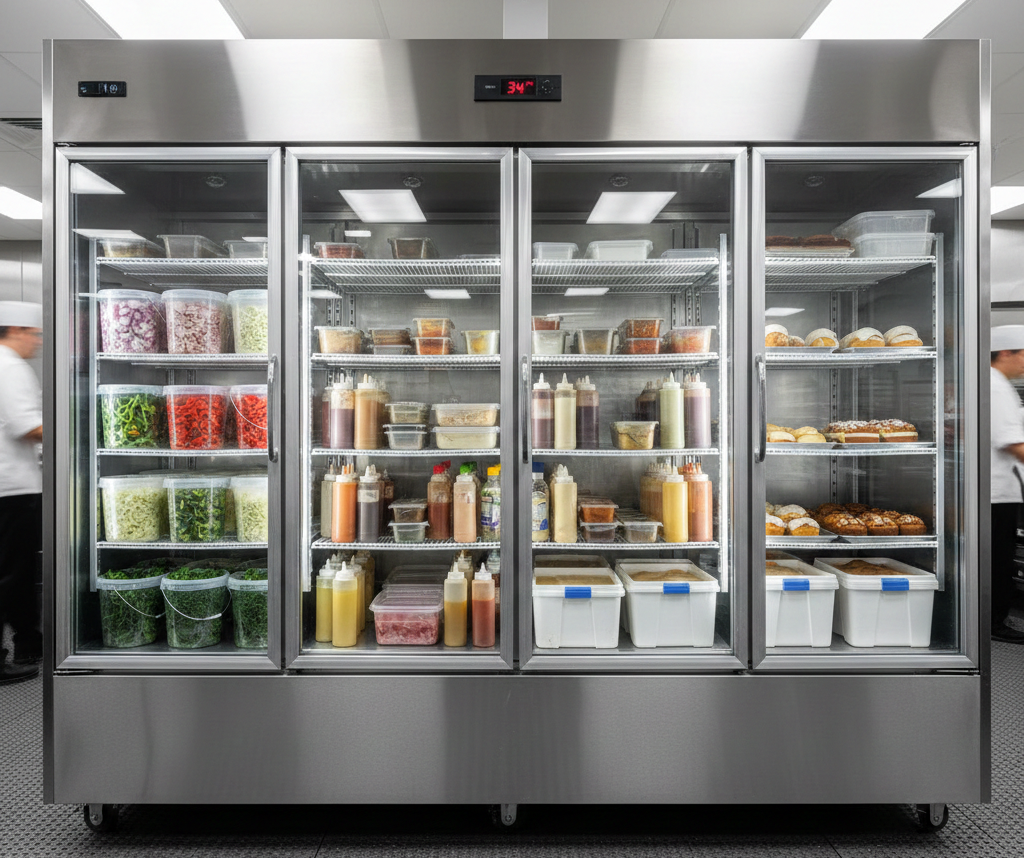
When discussing physical endpoints, commercial refrigeration is a major part of the picture. In many kitchens, brands like True refrigeration offer reliable prep coolers and upright units that pair well with constant temperature tracking, and the equipment available to order provides examples of models commonly used in food service. Looking into this can give you a clearer idea of how much hardware has evolved.
Where DePIN and Oracles Fit In
Decentralized physical infrastructure networks let operators share secure sensor bandwidth. The idea is simple. Instead of one company managing all the gateways, a distributed pool of participants keeps data flowing. That reduces the chance of a single point of failure.
But a challenge remains. Oracles, which move data from sensors to the chain, must be trustworthy. If the oracle misreports a temperature, the blockchain will preserve that mistake. Strong validation and cross device comparison reduce the risk. Many operators now use multi sensor voting or local buffer checks to ensure data is authentic.
The ROI for Restaurants and Grocers
Most teams see returns in fewer product losses, fewer emergency repairs, and easier audits. Even modest improvements can save thousands per year. Some businesses start with high risk assets like seafood or dairy and expand once they see the value.
A lesson here is that digital logs are only as good as the hardware behind them. Investing in durable refrigeration and dependable sensors protects margins, supports food safety, and prepares operations for stricter audits.