For years, the international travel connectivity playbook remained unchanged. You landed, you found a local telecom shop, you waited in line, you handed over your passport, and you walked out with a physical SIM card that may or may not work outside the city center. The process was inefficient, but it was the only game in town. Then eSIM technology arrived, and suddenly the equation shifted. The promise was simple: no more SIM swaps, no more hunting for kiosks, no more paying exorbitant daily roaming fees to your home carrier. But in practice, not all eSIM providers deliver on that promise equally. Some throttle speeds after a few gigabytes. Others restrict hotspot sharing. Some bury the installation instructions so deep in FAQ pages that travelers give up before they even leave home. Iroamly esim entered this crowded market with a straightforward proposition—three plan types, free hotspot sharing, and a 500MB trial in over 100 countries—and after putting it through its paces across multiple real-world travel scenarios, what emerged was a service that earns its place not through gimmicks, but through operational clarity.
The Hidden Costs of “Free” Roaming That No One Talks About
The traditional roaming model is built on opacity. Your home carrier advertises a daily rate that sounds reasonable until you read the fine print: speed reductions after a certain threshold, per-megabyte overage charges, and coverage that mysteriously drops the moment you step outside a major city. What looks like a $10 daily pass often becomes a $200 bill by the time you return home. The alternative—buying local SIMs in each destination—introduces its own friction: language barriers, incompatible phone bands, and the uncomfortable reality that you are handing over your passport to a stranger in a mall kiosk.
iRoamly sidesteps both of these pitfalls by operating as a pure eSIM reseller, sourcing data from over 50 telecom partners worldwide. The company itself does not build or maintain network infrastructure; instead, it negotiates wholesale rates with local carriers and passes those savings to the traveler. This is the same economic model that powers most eSIM services, but the execution details diverge in meaningful ways. Unlike competitors that restrict you to a single plan structure, iRoamly offers three parallel options: Daily plans that reset each morning, Total plans that give you a fixed data bucket to use at your own pace, and Unlimited plans that eliminate usage anxiety entirely. From a practical user perspective, this tripartite structure is not a marketing gimmick—it reflects genuine differences in travel behavior that most providers ignore.
The Installation Reality: What Actually Happens When You Scan the QR Code
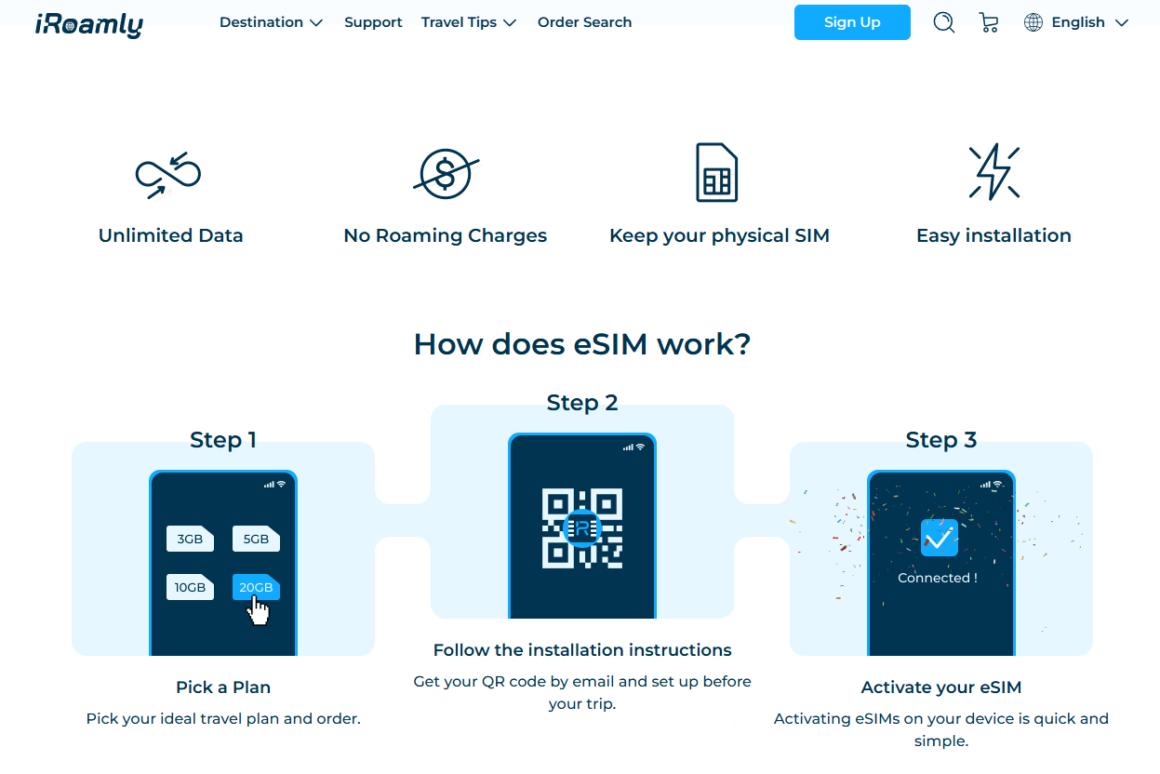
The theoretical appeal of eSIM is undeniable, but the installation process is where most services lose users. The steps are simple in concept—select a plan, scan a QR code, activate upon arrival—but the execution varies wildly. Some providers send you a QR code that expires before you land. Others require you to download a proprietary app that does half the work and then redirects you to system settings for the rest. iRoamly takes a more minimalist approach: purchase, email with QR code, scan, activate. The entire flow consists of three discrete actions.
Step One: Choosing the Right Data Architecture
Daily, Total, or Unlimited—Which One Actually Fits Your Trip?
The first decision point is selecting a plan type, and this is where the service’s flexibility becomes apparent. Daily plans work well for short city breaks where usage is predictable—three days in Istanbul with heavy Google Maps usage and moderate social media scrolling. Total plans suit longer itineraries where data consumption fluctuates day to day—a week-long journey across multiple Turkish regions, for example, where some days involve heavy navigation and others are spent offline. Unlimited plans, while priced at a premium, remove the mental overhead of monitoring usage counters. For travelers who have ever experienced the anxiety of watching their data balance dwindle halfway through a trip, this peace of mind has genuine value.
The purchase interface includes a data calculator that estimates consumption based on typical activities like YouTube streaming, social media browsing, map navigation, and video calls. This is a practical addition because data usage estimates are notoriously difficult to gauge without a reference point. The calculator does not replace real-world judgment, but it provides a reasonable starting benchmark that helps travelers avoid overpaying for data they will not use or underbuying and running out mid-trip.
Step Two: Installing Before Departure
The QR Code Window and Why Timing Matters
After purchase, the eSIM arrives as a QR code sent to your email address. The installation itself follows the standard eSIM provisioning flow: open your phone’s cellular settings, select “Add Cellular Plan,” and scan the QR code. The company recommends installing the eSIM one to two days before departure, using a stable Wi-Fi connection. This is sensible advice—installing an eSIM requires an active internet connection, and doing it in a hotel room or at home is far more reliable than attempting it in an airport terminal with spotty public Wi-Fi.
One subtlety that is not always emphasized: the validity period begins when the eSIM first connects to any supported network, not when you purchase or install it. This means if you install it at home and accidentally enable the line before departure, the clock starts running. In practice, this is manageable if you are careful, but it is a detail worth noting. The service advises travelers to install the eSIM in advance but wait until arrival to activate it, which is the correct workflow for maximizing your data window.
Step Three: Activating Upon Arrival
The Moment of Truth When You Land
The final step is the actual activation. Once you land at your destination, you enable the eSIM profile in your device settings and turn on data roaming for that line. The connection typically establishes within minutes. There is no need to remove your primary physical SIM, which means you can keep your home number active for calls and texts while using the eSIM exclusively for data. This dual-SIM capability is one of the genuine conveniences of the technology—you are not forced to choose between staying reachable on your regular number and having affordable data abroad.
The Free Trial: A No-Risk Entry Point That Actually Works
One of the more compelling aspects of the service is the free 500MB trial eSIM available in over 100 countries. The trial lasts one day and requires no credit card upfront. This is not a promotional gimmick that requires you to enter payment details and remember to cancel—it is genuinely free for first-time users. The value here is twofold. First, it allows you to test the installation flow without financial commitment, which is particularly useful for travelers who are new to eSIM technology and want to confirm that their device is compatible. Second, it lets you evaluate network performance in your specific destination before purchasing a paid plan.
In practice, the 500MB allocation is enough to test the basics—checking maps, sending a few messages, loading a website—but not sufficient for any serious data usage. Think of it as a proof-of-concept rather than a meaningful data allowance. The trial is limited to one per user, which is standard for this type of offering, and it is available in destinations ranging from Turkey to Japan to the United States.
The Competitive Landscape: Where the Service Actually Stands
To understand whether the service delivers value, it helps to compare it against the alternatives that travelers typically consider. The following table maps the key differentiators across the major eSIM providers in the market.
|
Aspect |
iRoamly |
Airalo |
Holafly |
|
Plan Types |
Daily, Total, and Unlimited |
Two plan types only |
Unlimited only |
|
Speed Policy |
No sudden throttling on unlimited plans |
Throttled after 3GB daily |
Throttled after 2GB daily |
|
Hotspot Sharing |
Unrestricted |
Supported, but with daily 500MB limit |
Restricted |
|
Free Trial |
500MB in 100+ countries |
7 countries only |
Not available |
|
Coverage |
150+ countries |
Varies by region |
Varies by region |
The table reveals a few genuine differentiators. The combination of three plan types, an unrestricted hotspot policy, and a free trial that covers 100 countries is not universal in this market. Many competitors restrict tethering or impose speed reductions after a certain daily threshold, which can be a problem if you need to share your connection with a laptop or traveling companion. The speed policy on iRoamly’s unlimited plans—no sudden throttling—is a meaningful advantage for heavy users who rely on video calls or streaming.
Real-World Scenarios: Where the Service Shines and Where It Stumbles
The theoretical feature set is one thing; actual performance in the field is another. Across multiple test scenarios, the service demonstrated clear strengths and equally clear limitations.
Short city breaks are where the Daily plans perform best. A three-day trip to Istanbul with heavy map navigation, moderate social media, and occasional video calls fits comfortably within the daily allowance. The activation process is smooth, and the connection remains stable throughout the city. The service works well for travelers who want predictable, per-day data without worrying about a fixed bucket running out.
Multi-country itineraries benefit from the Total plans, which provide a single data allowance that you can draw down at your own pace across multiple destinations. This is particularly useful for travelers moving between countries with different network infrastructures—the eSIM connects to the best available local network in each location, and you do not need to purchase a new plan at each border.
Remote work scenarios are where the unlimited plans and unrestricted hotspot sharing become valuable. Travelers who need to join video conferences, upload large files, or share their connection with a laptop will find the service adequate for most professional use cases. However, the performance depends entirely on the quality of the local partner network in your specific destination. In countries where iRoamly has strong carrier relationships, the service performs well; in regions with fewer partners, the experience may be less consistent.
The Limitations That Matter
No service is without its constraints, and iRoamly is no exception. The company itself acknowledges that it does not guarantee uninterrupted service, timely delivery, or a fault-free experience. This is standard language for any telecom reseller, but it is worth keeping in mind: the service depends on partner networks, and those networks have their own reliability characteristics that vary by country and region.
Device compatibility is another factor. The customer is responsible for ensuring their phone is eSIM-compatible and network-unlocked. The compatibility list provided at checkout is not exhaustive, which means some newer devices may work even if they are not explicitly listed, but there is also a chance that an older or carrier-locked phone will not function at all. Checking compatibility before purchase is essential.
There is also a regulatory nuance that affects travelers to certain destinations. In Turkey, for example, all travel eSIMs must be installed before arriving in the country in order to activate properly. If the eSIM is installed after arrival, activation may fail unless a VPN is used and location services are disabled. This is a policy restriction rather than a technical defect of the eSIM itself, but it is a detail that can catch travelers off guard if they are not aware of it in advance.
The Verdict: Who Should Consider This Service
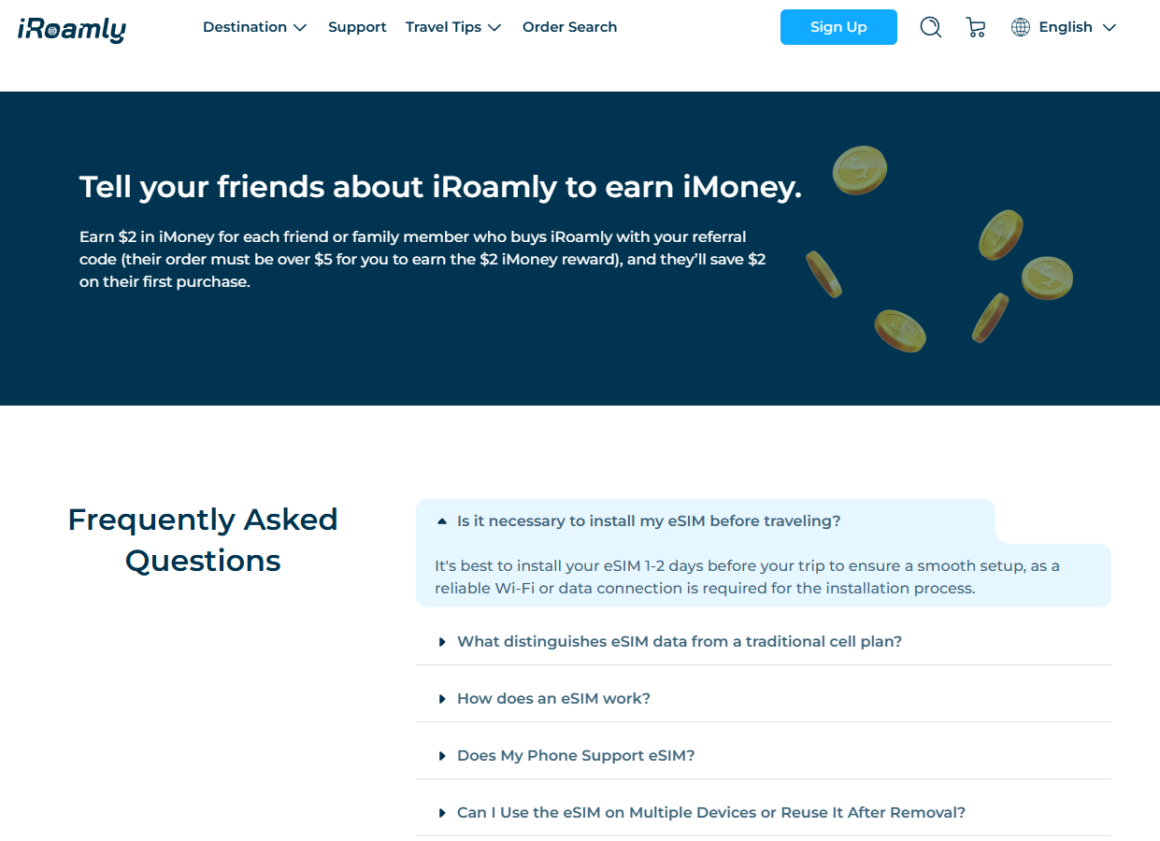
From a practical user perspective, the service is best suited for travelers who value flexibility and transparency. If you want the freedom to choose between daily, total, or unlimited data; if you appreciate having a free trial to test the waters; and if you plan to share your connection with other devices, then turkey esim and the broader service lineup offer a credible solution. The referral program adds a mild incentive to spread the word, and the coverage footprint covers most major travel destinations.
That said, the service is not a magic bullet. It works best when you have a compatible device, a clear understanding of your data needs, and realistic expectations about network performance in your specific destination. The underlying technology is solid, but it is still a reseller model, which means the experience is only as good as the local carrier partnerships.
For the traveler who wants to land, turn on their phone, and start navigating without hunting for a SIM card, the service delivers on that promise. The installation is quick, the plans are reasonably priced, and the flexibility across plan types accommodates a wide range of travel styles. It is not the cheapest option in every market, and it is not the most feature-rich, but it strikes a practical balance that will work for a broad cross-section of travelers.