Over the past five years, cryptocurrency brands have poured billions into stadiums, jerseys, and racing cars, only for many of them to vanish just as quickly. The result is one of the most turbulent stories in modern sponsorship. This look at crypto sponsorships in sports breaks down who is winning, who is losing, and what the wreckage of the first boom has left behind.
The crypto-sports story sits at the crossroads of finance, streaming, and entertainment, which is exactly why it moves so fast. The same low-latency video that carries a live match also powers a canadian live casino, where real dealers, digital payments, and online casino technology meet in a single feed. For young crypto firms, sport promised the one thing money alone could not buy quickly, which is mainstream trust.
The Boom: When Crypto Money Flooded the Arena
During the 2021 and 2022 boom, crypto money reached almost every corner of sport. Crypto.com paid a reported $700 million to rename the Los Angeles arena that hosts the Lakers, while FTX secured the Miami Heat arena, a Major League Baseball deal, a Mercedes Formula One partnership, and a $210 million esports pact with Team SoloMid. By 2022 the sector had signed a record 173 sponsorships, and that year’s Super Bowl was nicknamed the Crypto Bowl.
The Bust: FTX and the Crypto Winter
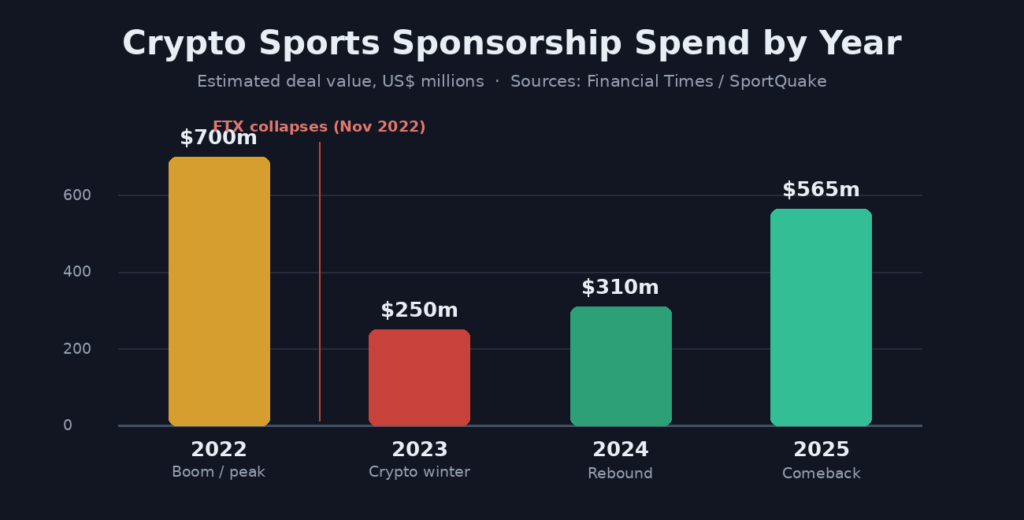
The bust arrived with brutal speed once FTX filed for bankruptcy in November 2022. A company once valued at $32 billion collapsed within days, its founder was later convicted of fraud, and partners raced for the exits. Miami-Dade County, Major League Baseball, and Mercedes all ended their deals, while the failures of Voyager and Terra voided further agreements with NASCAR and the Washington Nationals. Estimated annual deal value fell from roughly $700 million to about $250 million the following year.
Winners and Losers at a Glance
Sorting the winners and losers reveals a clear split between firms that overreached and those that survived to spend more wisely. The table below summarises where some of the biggest names stand today.
|
Brand or firm |
Verdict |
What happened |
|
FTX |
Loser |
Collapsed in 2022, dragging Miami Heat, MLB and TSM deals into bankruptcy |
|
Voyager and Terra |
Loser |
Failed firms whose crashes voided NASCAR and Washington Nationals deals |
|
Crypto.com |
Winner |
Survived and expanded, adding the Champions League and an F1 deal to 2030 |
|
Coinbase |
Winner |
Signed an Aston Martin F1 deal paid in stablecoins and returned to esports |
|
Tether |
Winner |
Bought a stake of around $50 million in Juventus |
Where some of the biggest crypto sponsors stand after the boom and the bust.
The Comeback: A Smarter Second Wave
The comeback has been quieter but far more disciplined than the first rush. Overall crypto sponsorship spending climbed about 20% to some $565 million in 2024-25, with football and Formula One taking the largest share. Crypto-native gambling brands rejoined the wave too, as crypto sports betting sites and online casino operators backed events from snooker to motorsport. Sportsbook and esports betting deals, by contrast, cooled from their peak, and today’s agreements are smaller, tied to clear returns, and often settled in stablecoins rather than hype.
Expert tip The FTX era taught sports bodies to look before they leap. Manchester City once suspended a crypto partnership because the sponsor had almost no digital footprint, and morality clauses that allow quick termination are now standard in these contracts.
Crypto Sponsorship FAQ
A few questions cut to the heart of the crypto sponsorship story.
Q: Why did crypto brands rush into sports?
A: Sponsorship offered fast mainstream visibility and a sense of legitimacy that young digital-finance firms could not build on their own.
Q: What was the biggest crypto sports collapse?
A: FTX’s 2022 bankruptcy was the largest, unwinding deals with the Miami Heat, Major League Baseball, and the esports team TSM.
Q: Is crypto sponsorship growing again?
A: Yes, spending rebounded through 2024 and 2025, though the deals are smaller, more selective, and concentrated in football and Formula One.
Settling the Score
Settling the score, the winners are the well-funded survivors who now treat sport as a measured investment rather than a marketing land grab. The losers were the overspenders whose collapse stranded arenas, leagues, and fans alike. Crypto sponsorships in sports look healthier for the reckoning, yet everyone involved is studying the next deal far more carefully than before.