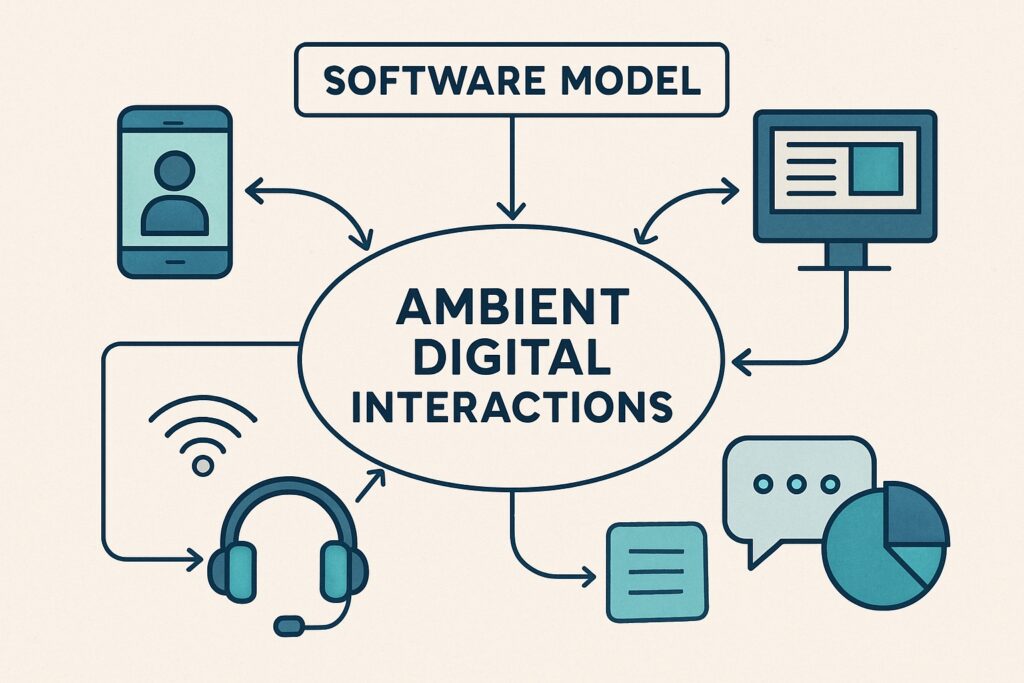
Michael Faston and the Etherions appear across niche forums and technical papers. The term etherions describes a software model that maps ambient digital interactions. He studies behavior, writes code, and tests prototypes. The work links AI agents, distributed systems, and user data. This update summarizes his background, the etherions concept, and the record of projects that shaped its adoption.
Key Takeaways
- Michael Faston developed the etherions model to capture short-lived, ephemeral data signals that improve real-time decision-making in software systems.
- Etherions function as a lightweight layer between user activity and service logic, enabling faster personalization and reducing latency without relying on long-term storage.
- The model emphasizes minimal CPU usage, compact encoding, explicit expiry, and privacy-conscious design by avoiding persistent personal data storage.
- Etherions have been successfully applied in live services, mobile apps, and games to enable quick context delivery, feature gating, and session tagging with low overhead.
- Faston’s published libraries and research provide practical guidance and tools for implementing etherions effectively across distributed systems.
- The growing adoption of etherions reflects their value in scenarios requiring fast, ephemeral context handling that balances performance and privacy needs.
Who Is Michael Faston And What Are Etherions?
Michael Faston leads research in applied software models. The phrase etherions refers to a model that tracks session signals and event metadata. He frames etherions as a lightweight layer that sits between user activity and service logic. The layer captures short-lived signals and surfaces them to decision modules. Researchers use the etherions term to describe small, transient data objects that influence runtime choices.
Michael Faston published papers and presented talks that explain the etherions model. He argues that etherions reduce decision latency and improve personalization for real-time apps. Practitioners adopt etherions when they need quick context without long-term storage. Faston shows how etherions apply to web apps, mobile games, and edge services.
Observers compare etherions to session tokens and ephemeral feature stores. The comparison helps teams evaluate trade-offs. Etherions focus on immediacy and low-cost serialization. Teams that carry out etherions keep schema simple and limit lifespan. The pattern favors compute close to the request path and avoids heavy persistence.
The term etherions appears in open discussions and in small research outlets. Michael Faston maintains a public profile that links code samples and short notes. He publishes updates about experiments and failure cases. Readers cite his work when they describe ephemeral context handling in distributed systems.
Michael Faston and the etherions concept now inform tooling choices for live services. Engineers adopt the model when they need fast signals and predictable overhead. The pattern also helps balance privacy needs because etherions do not require long-term storage of personal data.
Timeline Of Faston’s Career And The Evolution Of The Etherions Concept
2009–2014: Faston worked as an engineer on backend systems. He built logging, queues, and cache layers. During this period he noticed many apps needed short-lived context that did not fit caches or databases.
2015–2018: He wrote early notes that used the etherions label. He published examples that showed how to serialize short-lived signals and deliver them with sub-millisecond cost. He shared sample code and benchmarks with developer communities.
2019–2021: The idea spread into small teams at startups. Engineers tested etherions for A/B routing and feature gating. The pattern helped apps reduce false positives in personalization. Teams also used etherions to tag user flows for analytics without storing raw events long-term.
2022–2024: Faston refined the model and published a set of design constraints. He emphasized minimal CPU impact, compact encoding, and explicit expiry. He also cautioned about drift when teams treat etherions like durable storage. The guidance improved implementations and reduced misuse.
2025–2026: The term gained traction in production systems for games and live services. Developers incorporated etherions into middleware that runs in front of core services. The pattern now supports quick decisions in latency-sensitive scenarios.
Michael Faston continues to publish source code and short how-to notes. He posts implementation notes and real-world performance figures. He adapts the model to new runtime environments and to client-side edge processing.
Notable Projects, Publications, And Collaborations Involving Etherions
Faston released a reference library that serializes etherions into compact byte arrays. Teams used this library to pass context between microservices. The library reduced serialization overhead and helped keep message sizes small.
He co-authored a white paper that compared etherions to ephemeral caches and to feature flag systems. The paper listed safe usage patterns and failure modes. Engineers referenced the paper when they designed short-lived context pipelines.
Faston collaborated with game studios that needed live personalization. Studios used etherions to tag active sessions for temporary matchmaking signals. The approach reduced matchmaking churn and improved perceived fairness.
He also worked with a small edge-compute vendor to test client-side creation of etherions. The tests showed that creating etherions on the client can lower round trips and speed up initial responses.
Observers note that Faston published case studies with conservative claims. He reported latency reductions and smaller storage needs. Readers used those claims to justify experiments and to measure return on engineering effort.
Some teams adapted etherions into logging pipelines. They used ephemeral markers to correlate actions across services. Engineers kept markers short lived to protect user privacy and to limit storage costs.
Faston and his collaborators continue to refine the pattern. They publish source code, implementation notes, and measured outcomes. The ongoing material helps teams decide when to use etherions and when to prefer other patterns.
The broader community now treats etherions as a practical approach for quick context delivery in live systems. The model supports low-latency decisions and aligns with privacy-conscious design. It also fits apps that value small operational overhead and clear expiry semantics.
A recent example of music licensing in sports broadcasts shows how live content can depend on short-lived signals in delivery chains. The NFL’s recent piece on the Thursday Night opener highlights how producers layer music and media for live events Thursday Night opener. Faston’s etherions model can sit in similar live chains to pass quick tags and playback hints.