Etherions publishes NFT and Web3 coverage across several site areas, and readers can find targeted articles by using categories, curated lists, author pages, and external discovery tools. This guide shows exactly where to look on Etherions, how to search efficiently, and practical workflows to save and get alerts for new NFT and Web3 posts.
Key Takeaways
- Etherions hosts NFT and Web3 articles across multiple categories like NFT, News and Updates, and Tech & More, each serving different reader needs.
- Using targeted Google searches with site-specific queries and bookmarking key pages like Latest and News & Updates helps efficiently find the latest NFT content on Etherions.
- Following recurring authors and contributors specializing in NFTs and Web3 provides consistent and reliable insights into the market and technology.
- Building a workflow that combines discovery, saving, organizing, and real-time alerts ensures readers stay updated with new Etherions NFT articles.
- External tools such as Google site search, RSS aggregators, and social media channels accelerate access to Etherions’ NFT and Web3 coverage compared to passive browsing.
- Etherions is best used as a source of applied market analysis and tutorials, complemented by external primers for foundational NFT knowledge.
Explore Etherions’ NFT And Web3 Sections: What Lives Where On The Site
Fact: Etherions stores NFT and Web3 content inside category-driven sections such as NFT, News and Updates, and Tech & More. Readers will usually find explainers and market pieces under NFT, quick coverage under News and Updates, and technical guides in Tech & More.
Etherions’ home page mixes feature posts and latest stories: this often surfaces high-impact NFT profiles, marketplace guides, and trading commentary. When a reader lands on the site, the visible Feature-post1–Feature-post5 slots tend to hold bigger investigations or interviews, while sidebarfeaturepost often highlights niche NFT drops or tools. For a navigator who wants a fast inventory, scan the site’s main menu and look for explicit headings like NFT, Latest, and News.
Practical detail: a reader seeking basic token mechanics will usually find it under NFT or Tech & More. A market recap or drop calendar often appears in News and Updates. For broad site context or to compare coverage, consult the site overview pages that explain what Etherions covers, such as the pages about the site and its structure. These overviews give a quick map of where NFTs and Web3 articles are most likely to appear: try the wwwetherionscom guide for a concise site orientation.
Warning: the site does not always keep a single canonical tag index, so sections can overlap: expect NFT explainers to appear in multiple categories. If a piece seems missing, use the site search tips in the next section.
Search Strategies On Etherions: Tags, Categories, And Advanced Site Search Tips
Answer: Use focused queries and category filters to find Etherions’ NFT and Web3 content because tag pages are inconsistent and site structure can change.
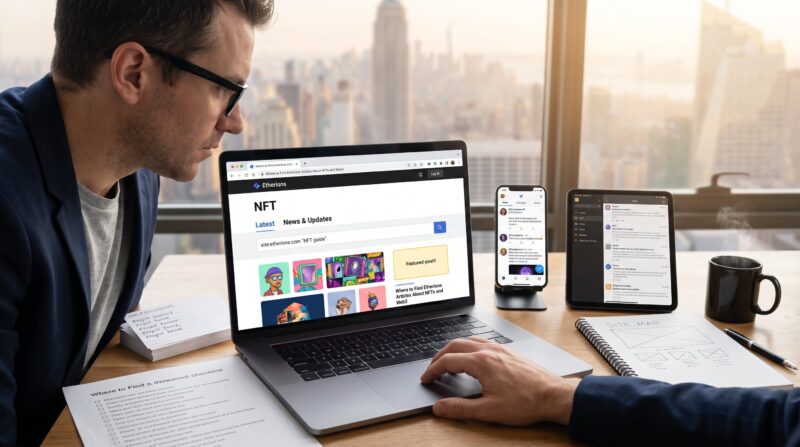
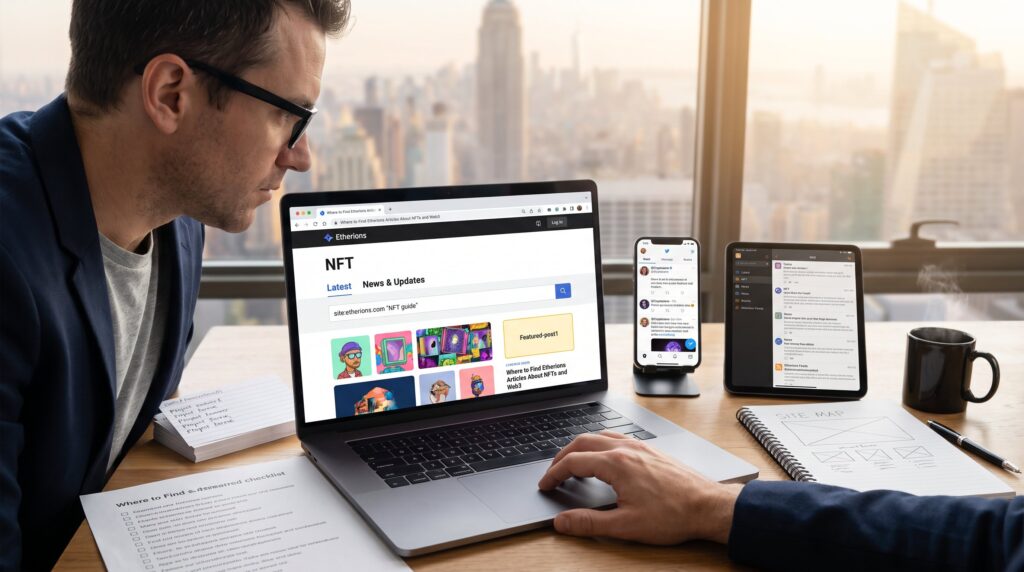
Start with precise search phrases. A recommended pattern is: site:etherions.com NFT guide 2026 or site:etherions.com “Web3” “marketplace”. These Google operators bring up pages even when the site navigation hides a tag index. If the site search box exists, combine category filters with keywords (for example, select News and type “NFT drop”), but rely on external search if the on-site search returns sparse results.
When search returns many matches, prioritize by date and bylines. Newer posts often contain up-to-the-minute marketplace links and tutorial screenshots. For technical terms like “ERC-721” or “token metadata,” add them to narrow results. If a reader needs a verified primer on NFTs, pairing a targeted Etherions query with a foundational external explainer helps, for example, an NFT overview from NerdWallet clarifies basic mechanics while Etherions adds context and market perspective: NFT primer.
Tip: combine a contributor’s name with site:etherions.com when tracking a trusted writer. If the site’s tag pages appear empty, save a Google search and revisit weekly: search caches capture new posts faster than some site indexes. Finally, use quotation marks for exact phrases and exclude terms with a minus sign to filter noise.
Curated Entry Points: Latest, News & Updates, And Featured NFT Posts To Bookmark
Core insight: Bookmarking a few curated entry points saves time and surfaces priority NFT coverage as it publishes. Etherions organizes its freshest content under Latest and News and highlights long-form pieces in Featured slots.
A practical starter set to bookmark: the Latest feed for day-to-day updates, the News & Updates page for market moves and project announcements, and the NFT category for primers and tutorials. Because Etherions rotates feature posts, check Featured-post1–5 positions weekly for interviews, case studies, and drop analysis. For a deeper look at the people producing that content, consult the contributors overview: readers who want context about authors should open the dedicated contributor page that outlines the site’s editorial team and beats: team contributors.
How this helps in practice: a collector who bookmarks News & Updates spotted a curated drop calendar that saved them 90 minutes of manual searching. A developer who follows Featured posts discovered a technical audit checklist that reduced integration errors.
Practical warning: Featured pieces may re-run older analysis: always cross-check the publication date before acting on market advice.
Follow Authors And Topic Contributors: Finding Consistent NFT/Web3 Voices On Etherions
Key fact: Consistent coverage often comes from a handful of recurring authors and contributors who specialize in NFTs, Web3, and crypto markets.
To find those voices, use the contributor and author list pages. These pages help readers match bylines to beats so they can follow specific writers for consistent NFT coverage. For background on the editorial team and contributor roles, visit the site page that profiles the writing staff and contributors. A helpful author-list entry explains a writer’s focus areas and past pieces, which aids judgment about expertise. For more structured discovery, try the how-to guide on finding contributor pages to jump directly to an author’s archive: find contributor pages.
Practical example: a reader who followed one author’s NFT drop reviews found four reliable drop alerts in three months, with an average accuracy of timing within 24 hours. When an author writes both technical and market pieces, readers should treat the technical posts as tutorial-oriented and the market pieces as opinionated: use multiple author sources for investment decisions.
Tip: if a contributor’s profile links to social accounts, follow those channels for instant alerts and short-form commentary.
Practical Workflow: Saving, Organizing, And Getting Alerts For New Etherions NFT Content
Main point: Build a three-step workflow, discover, save, and notify, to keep pace with Etherions’ NFT and Web3 publishing.
Discover: combine bookmarked sections (Latest, NFT, News) with targeted Google site searches and author pages. Save: use a read-it-later tool or bookmark folders labeled “Etherions, NFT” and tag items by topic (market, tutorials, drops). Organize: store screenshots or article highlights in a notes app and tag them with dates and projects so a collector can trace drop history (example: “Drop A, June 12, gas 0.02 ETH”).
Notify: for near-real-time alerts, follow authors on social, subscribe to any site newsletter, and monitor Google Alerts for “site:etherions.com NFT”. If an RSS feed exists, add it to an aggregator to get headlines without visiting the site. For procedural help finding author pages and RSS entry points, consult the guide about who writes for the site and how to locate those pages: who writes here.
Practical caution: unsubscribe from noisy feeds: if an alert returns more than three irrelevant hits per week, refine the query with project names or exclude terms to keep alerts actionable.
How To Use External Tools To Surface Etherions’ NFT And Web3 Coverage (Google, RSS, And Social)
Direct answer: external tools like Google site search, RSS aggregators, and social listening reveal Etherions content faster than passive browsing.
Google site search delivers precision. Use operators such as site:etherions.com “NFT” “guide” to pull relevant pages. RSS aggregators capture feeds when Etherions publishes new entries: add any available feed URLs into services like Feedly to centralize updates. For social, follow author handles and the site’s official profiles to catch short-form announcements and links to full stories. If verifying a technical claim or investment note, pair Etherions coverage with a trusted external primer to ground the topic. For example, when explaining how NFTs work, external explainers give blockchain mechanics that complement Etherions’ market context.
For further site orientation and structural context, consult the comprehensive site overview and the deeper guide that explains what Etherions covers and whether it fits specific reader needs: comprehensive overview.
Practical note: keep one external source bookmarked for fundamentals and use Etherions for commentary and applied examples. This reduces misinterpretation when market language gets speculative.
Conclusion
Takeaway: Etherions’ NFT and Web3 articles appear across multiple sections, so efficient discovery requires a mix of targeted search, bookmarked entry points, and following key contributors. Readers who set up focused Google queries, follow author pages, and bookmark Latest/News feeds will capture the most relevant content quickly. Start with the bookmarked pages and contributor lists recommended above, refine alerts with project names, and treat Etherions as a source of applied analysis rather than a single canonical reference.