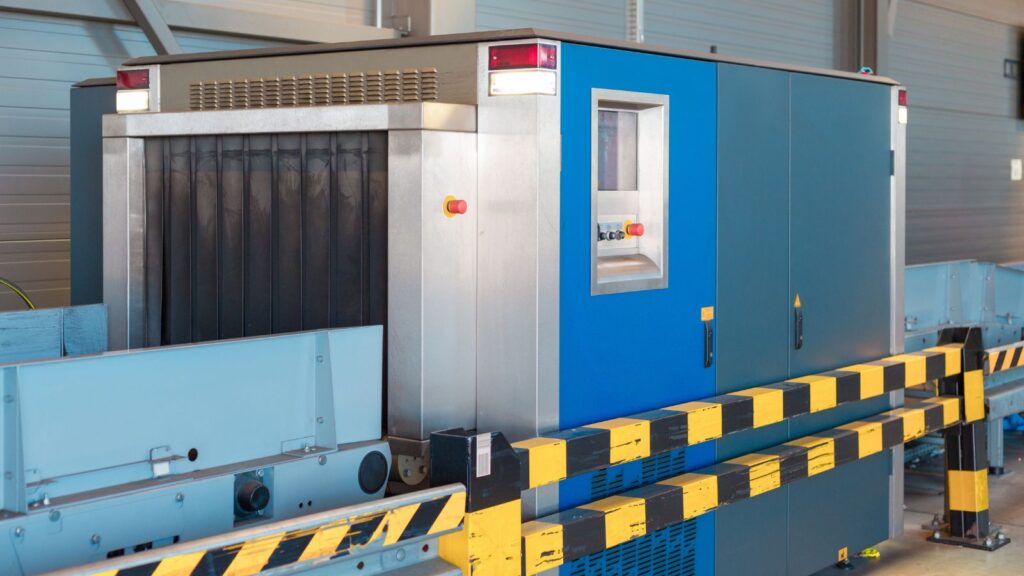
In today’s security-conscious world, X-ray baggage scanners are foundational tools that protect people, property, and sensitive information across airports, corporate offices, and government buildings. These devices do more than detect prohibited items; they enable efficient screening, reduce human error, and support a layered security approach. Below, we explore how security X-ray machines enhance safety, streamline operations, and adapt to evolving threats — plus practical guidance for choosing and deploying them.
Why X-ray baggage scanners matter
X-ray scanners provide a non-invasive, fast, and reliable way to examine the contents of bags, parcels, and cargo. Unlike manual searches, which are time-consuming and can miss concealed items, X-ray technology visualizes internal structures and densities, enabling operators to identify weapons, explosives, contraband, and other anomalies quickly. Their advantages include:
- Speed: Scanners process large volumes of luggage rapidly, reducing queues and maintaining operational flow.
- Accuracy: Advanced imaging, dual-energy detection, and automated threat recognition reduce false negatives and positives.
- Documentation: Digital images can be stored for audit trails, investigations, and training.
- Safety: Non-invasive screening preserves privacy and minimizes physical contact, crucial in high-traffic environments and during public health concerns.
Airports: the frontline of aviation security
Airports rely heavily on security X-ray machines at multiple checkpoints – passenger screening, checked baggage, and hold/cargo areas. Their role includes:
- Detecting prohibited items: From firearms and knives to explosives and incendiary devices, X-ray scanners flag threats before they reach secure areas or aircraft.
- Supporting behavior detection: Images help security personnel corroborate suspicious behavior or intelligence leads.
- Enabling throughput: Modern X-ray systems with conveyor belts and automated detection keep passenger lines moving while maintaining high screening standards.
- Integration with other systems: Scanners tie into CCTV, access control, and passenger data systems to create a cohesive security ecosystem.
Advanced solutions — like computed tomography (CT) scanners for checked baggage and automated threat detection algorithms — are becoming standard at major airports. They improve resolution, allow 3D reconstructions, and in some cases eliminate the need for removing liquids and electronics from carry-on luggage, enhancing passenger experience.
Offices: protecting assets and people
In corporate settings, security X-ray machines protect physical assets, intellectual property, and employee safety. Use cases include building entrances, mailrooms, and secure zones (R&D labs, data centers):
- Mail and package screening: X-ray scanners identify suspicious parcels that might contain hazardous materials or hidden devices, reducing delivery-related risks.
- Visitor screening: Portable or fixed scanners at entry points enable efficient checks without invasive searches, balancing security with professionalism.
- Data center and secure area access: Screening equipment prevents the entry of unauthorized storage devices or components that could facilitate data exfiltration or sabotage.
For offices, compact, lower-energy scanners with easy-to-interpret displays and automated alerting are often sufficient. Integration with access control and visitor management systems helps create an auditable, accountable security process.
Government buildings: safeguarding continuity and public trust
Government facilities house sensitive information and critical infrastructure, making robust screening essential. Security X-ray machines in courthouses, administrative offices, and legislative buildings serve to:
- Protect officials and the public from weapons and dangerous items.
- Secure classified documents and equipment against tampering or theft.
- Screen incoming mail and deliveries for hazardous or malicious contents.
- Support law enforcement investigations with stored imaging evidence.
Given the stakes, government installations often require higher-spec systems with enhanced detection capabilities, redundancy, and strict compliance with regulatory standards. They may also deploy specialized training and protocols for image interpretation and chain-of-custody handling.
Key technologies and features to look for
When selecting security X-ray machines, consider features that align with threat profiles and operational needs:
- Dual-energy imaging: Differentiates organic, inorganic, and metallic materials to better identify explosives and contraband.
- Automated Threat Detection (ATD)/Automatic Target Recognition (ATR): Uses algorithms to flag items matching threat signatures, reducing operator fatigue.
- Computed Tomography (CT): Provides 3D imaging and slice-view capabilities, improving detection of complex threats and reducing secondary screenings.
- Adjustable sensitivity and zoom: Helps operators focus on suspicious areas without false alarms.
- Ergonomic design and user interface: Intuitive displays and clear color coding speed decision-making.
- Image storage and network integration: For audit trails, remote review, and integration with security management systems.
- Portability and footprint: For offices or temporary checkpoints, compact or mobile scanners are preferable.
- Radiation safety and compliance: Ensure devices meet local and international safety standards and come with certification and maintenance support.
Operational best practices
Deploying scanners effectively requires more than hardware. Follow these practices to maximize effectiveness:
- Conduct a threat and vulnerability assessment: Tailor scanner choice and placement to real risks, traffic volume, and critical assets.
- Train operators: Skilled personnel interpret images and manage alarms. Regular refresher training reduces errors and improves response times.
- Establish clear procedures: Define what triggers secondary inspection, who authorizes it, and how to handle suspicious items or incidents.
- Maintain equipment: Regular calibration, testing, and software updates keep detection performance optimal and reduce downtime.
- Integrate systems: Link X-ray machines with access control, CCTV, and incident management for coordinated responses.
- Preserve privacy and legal compliance: Implement policies for image storage, data access, and screening protocols that respect privacy laws and civil liberties.
Challenges and mitigation
No technology is foolproof. Common challenges include operator fatigue, false positives, and the evolving sophistication of concealment techniques. Mitigation strategies:
- Rotate staff and use ATD tools to reduce fatigue.
- Calibrate sensitivity to balance false alarms with detection needs.
- Combine X-ray screening with physical searches, behavioral observation, and intelligence-led approaches.
- Stay current with threat intelligence to adjust protocols and equipment settings.
Future directions
Security X-ray machines will continue advancing with AI-driven image analysis, cloud-enabled remote review, faster CT scanners, and improved ergonomic designs. Integration with biometrics and identity management may enable smarter, risk-based screening where resources are allocated dynamically based on assessed risk. For mail and package screening, chemical and biological sensors may complement X-ray imaging to detect non-metallic threats.
Conclusion
Security X-ray machines are indispensable tools for protecting airports, offices, and government buildings. They enable fast, non-invasive screening, support documented security processes, and integrate into broader security ecosystems. Selecting the right technology and pairing it with trained operators, clear procedures, and regular maintenance ensures these systems deliver their full protective value.