In the high-stakes, fast-paced world of cryptocurrency and Web3, fortunes are made and lost in minutes. As an investor, trader, or builder in this space, you operate on the cutting edge of finance and technology. You meticulously analyze market trends, secure your seed phrases, and diversify your portfolio. But in the quest for the next 100x gem or the push to ship a revolutionary dApp, a fundamental aspect of personal operational security is often dangerously overlooked: the privacy and security of your internet connection.
While the blockchain itself may be immutable, the way you access it is not. Every time you connect to an exchange, check your wallet, or collaborate on a project, you are potentially exposing yourself to a host of digital threats. In an industry where a single mistake can lead to irreversible losses, fortifying your digital presence is not just a best practice—it’s a necessity.
The Unique Threats in the Crypto Arena
The decentralized nature of crypto empowers individuals, but it also places the full responsibility of security on your shoulders. The threats you face are more sophisticated and targeted than those encountered by the average internet user:
- Targeted Phishing and MitM Attacks: Crypto users are high-value targets. Hackers create convincing replicas of popular exchanges or wallet services to steal credentials. When you connect to these or even legitimate sites through public Wi-Fi at an airport or café, you become vulnerable to Man-in-the-Middle (MitM) attacks, where an attacker can intercept your data, including session cookies and passwords.
- IP Address Doxing and Tracking: Your IP address is a digital fingerprint that reveals your approximate physical location. Malicious actors can use this to link your on-chain activities to your real-world identity. This can lead to targeted hacking attempts, social engineering, or even physical threats, a risk no trader or entrepreneur should ignore.
- Geo-Restrictions on Exchanges and Services: The regulatory landscape for crypto is fragmented. A promising new token launch (IDO) or a high-liquidity exchange might be inaccessible from your country. For traders and researchers, these digital borders can mean missing out on significant opportunities.
A VPN: Your Essential Shield in the Digital Wild West
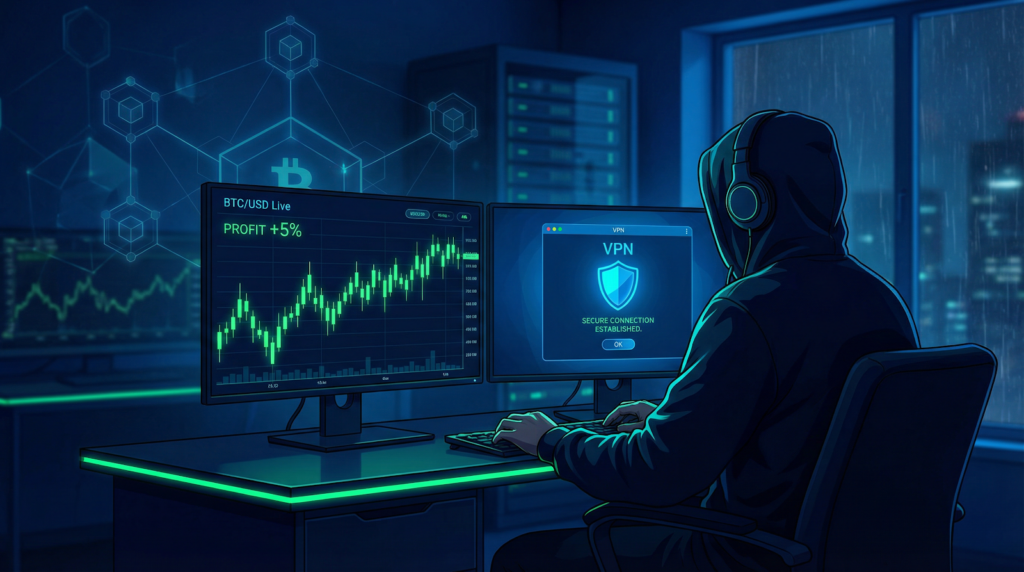
A Virtual Private Network (VPN) is one of the most powerful and straightforward tools to counter these threats. It acts as a crucial layer of defense by creating a secure, encrypted tunnel for your internet traffic. When you route your connection through a VPN, you fundamentally change how you appear on the internet.
Firstly, the encryption makes your data unreadable to anyone trying to snoop on your connection, rendering public Wi-Fi safe for managing your assets. Secondly, it masks your real IP address, replacing it with the address of the VPN server you’ve connected to. This instantly anonymizes your location, protecting you from IP-based tracking and allowing you to bypass frustrating geo-restrictions. You can appear to be in Tokyo while sitting in New York, giving you access to a truly global and open internet.
The Entrepreneur’s Edge: Beyond Basic Security
For the Web3 entrepreneur, a VPN is more than just a defensive tool; it’s a strategic asset for growth and operations:
- Secure Remote Team Collaboration: Web3 startups are often globally distributed. A VPN ensures that all team members, whether in Lisbon, Bali, or Dubai, can securely access shared resources, code repositories, and internal communications without risking a data breach.
- Anonymous Competitor and Market Research: Analyze a competitor’s new feature or research emerging market trends in different regions without revealing your company’s identity through its IP address. Maintain your strategic stealth.
- Accessing Global Financial Tools: Securely access international banking platforms, payment processors, or other fintech services that may be essential for running a global business.
Choosing the Right Armor for Your Digital Life
In the crypto world, not all tools are created equal. When choosing a VPN, look for a service built on a foundation of trust and technical excellence. Key features should include iron-clad AES-256 encryption and, most importantly, a strict and verified no-logs policy—if the provider doesn’t store your data, it can’t be leaked or seized.
Furthermore, for active traders and builders, performance is paramount. A top-tier service must offer high-speed servers across the globe to ensure your trading execution or development workflow is never compromised by lag. And since you operate across multiple devices, robust mobile support is non-negotiable. Ensure the service provides dedicated, intuitive apps for all your hardware, from a native Android VPN app for managing assets on the go to a seamless iOS VPN client for your tablet.
Ultimately, in a decentralized ecosystem, you are the guardian of your own fortress. While hardware wallets and strong passwords protect your assets, a high-quality VPN protects you. It’s a foundational investment in your privacy, security, and operational freedom in the exciting world of Web3.