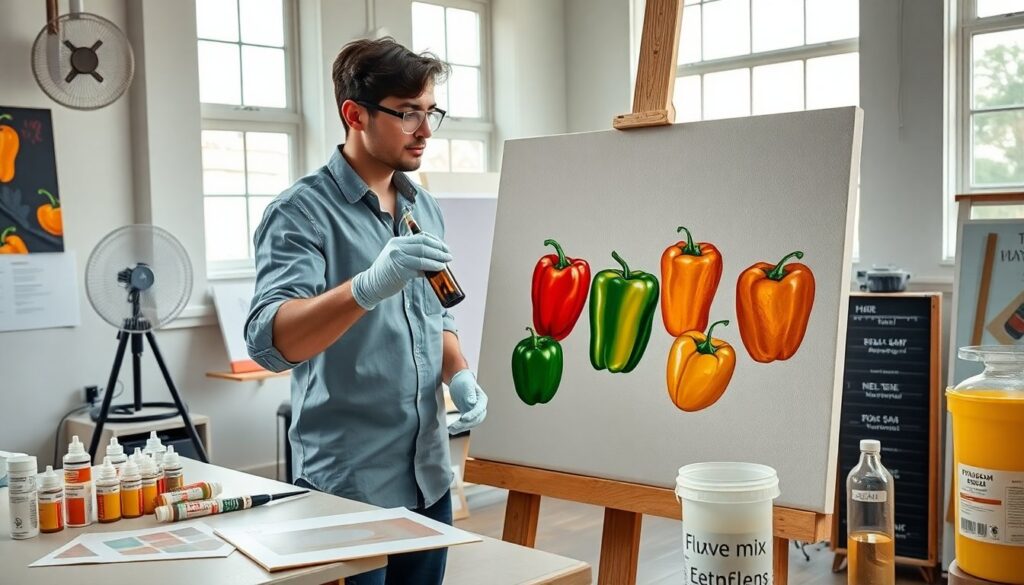
Metvresouh painting peppers ethyrione flux teaches an artist how to change pigment with flux. The method uses ethyrione flux to alter pepper pigments on canvas. The guide shows materials, setup, a step sequence, and fixes for common reactions. The reader learns practical steps. The text stays direct and clear so an artist can try the method fast.
Key Takeaways
- Metvresouh painting peppers with ethyrione flux uses innovative pigment layering to create vivid, color-shifting effects on canvas.
- Ethyrione flux alters pigment binders to produce faster drying times and clearer edge reactions, enhancing the painting’s visual impact.
- Successful application requires precise materials, a controlled workspace, and safety gear to ensure consistent and safe flux reactions.
- A step-by-step process guides the artist from sketching peppers to sealing the finished work, emphasizing testing and adjustment for best results.
- Troubleshooting common flux issues involves managing excess pooling, uneven reactions, and drying conditions for optimal pigment shifts.
- The technique supports creative variations, including mixed-media pieces, textile patterns, and live art demonstrations that showcase dynamic color changes.
What Metvresouh Painting Peppers Is And Why Ethyrione Flux Matters
Metvresouh painting peppers ethyrione flux names a painting method that combines pigment layering and flux-driven color shifts. The artist applies pepper-shaped stencils or hand-painted pepper forms. The artist then applies ethyrione flux to change hue and sheen where needed. Ethyrione flux matters because it acts on pigment binders and creates predictable shifts in saturation and refractive index. The process gives peppers a vivid, shifting look that the artist cannot get with standard glazing. Practitioners report faster drying time and clearer edge reactions when they use ethyrione flux. The technique suits painters who want experimental color effects but retain control. The method also suits mixed-media work that pairs paint with surface textures. Metvresouh painting peppers ethyrione flux fits studio practice and small gallery projects where color novelty adds value.
Essential Materials, Tools, And Workspace Setup For Flux-Based Pepper Painting
The artist selects mid-viscosity acrylics and ethyrione flux grade A for consistent reactions. The kit includes brushes in round and flat shapes, soft palette knives, silicone stencils cut to pepper profiles, nitrile gloves, and measured droppers for flux. The artist uses a primed cotton or linen canvas with low gloss. The workspace needs stable temperature and low humidity. The artist places a spray hood or fan at low speed to control drying. The artist keeps a neutral pH rinse bucket and labeled jars for mixed pigment. The artist stores flux in amber bottles and marks concentrations clearly. The painter also keeps chromatography strips to test pigment-flux response. Metvresouh painting peppers ethyrione flux requires safety gear: goggles and a respirator rated for organics when the artist works with concentrated flux. The setup reduces surprises and speeds repeatable results.
Step-By-Step Metvresouh Technique Using Ethyrione Flux
Step 1: The artist sketches pepper forms on the primed surface. The artist keeps forms simple and clear. Step 2: The artist blocks base colors with medium-opacity acrylic. The artist lets base layers dry under low airflow. Step 3: The artist tests a small area with a diluted ethyrione flux to observe shift. The artist adjusts concentration until the shift matches the plan. Step 4: The artist applies flux by fine dropper or soft brush. The artist moves quickly to control edge bleed. Step 5: The artist builds translucent glazes after flux sets to deepen local shadows. The artist uses palette knives to add texture where the flux created refraction. Step 6: The artist seals the panel with a clear, non-reactive varnish once reactions finish. The artist documents concentration and timing for each piece.
Troubleshooting Common Problems And How To Fix Flux Reactions
The artist may see blotchy shifts when flux pools. The artist removes excess flux with a dry brush within the work window. The artist can dilute the next application to reduce pooling. If the flux over-bleaches pigment, the artist adds thin glazes to restore color depth. If the flux creates unwanted surface film, the artist gently lift-scrapes with a palette knife before the film cures. If the flux reacts unevenly across pigments, the artist records pigment brands and avoids mixes that show inconsistent response. When drying stalls, the artist raises airflow slightly and lowers humidity. Metvresouh painting peppers ethyrione flux benefits from testing and logging: the artist gains control by tracking variables.
Creative Applications And Variation Ideas For Finished Pepper Canvases
The artist can arrange pepper motifs into repeating patterns for textile prints or wall panels. The artist can pair metvresouh painting peppers ethyrione flux with metallic leaf to highlight flux edges. The artist can crop single peppers and print them as limited-run giclée for sale. The artist can use the technique on wooden panels for mixed-media relief pieces. The artist can add hand-stitched accents to emphasize flux lines. The method also fits live art shows where observers watch color change under different lights. Galleries and sports-culture events have shown interest in art that blends pop imagery and color effects: a feature discussed by writers who track art trends supports this crossover. The artist can reference a feature on art and sports for context and placement in events like All-Star showcases by using a source that covers art collaborations in basketball culture NBA art showcase. The artist can adapt scale, from postcard size to large murals, while keeping flux tests as the first step. Metvresouh painting peppers ethyrione flux rewards iteration: the artist refines color response with each run.