Metvresouh painting peppers ethyrione flux describes a community-governed project that mixes protocol tools, token voting, culture, and niche economics. It uses modular nodes, smart contracts, and off-chain bridges. The community votes on funding, rule changes, and event grants. This guide explains how the infrastructure works, how the voting models function, and how skateboarding culture and melon economics inform real trials.
Key Takeaways
- DAO Ethyrioni leverages a multi-layer infrastructure combining smart contracts, modular nodes, and off-chain bridges to enable transparent community governance.
- The project uses a blend of voting models, including token-weighted, quadratic, and delegated voting, to balance influence and encourage fair participation with melon tokens as the native asset.
- Melon tokens function as access keys, reputation markers, and economic currency within skateboarding communities for funding local projects and events.
- Robust security measures like formal audits, multisig controls, and emergency protocols ensure the DAO’s infrastructure and treasury remain secure and resilient.
- Pilot trials incorporating real-world events, NFC verification, and micro-economies help refine governance models and demonstrate practical uses of the DAO’s infrastructure.
- The flexible design allows other communities, such as music or maker spaces, to adopt the same DAO Ethyrioni primitives for local governance and token economies.
What Is DAO Ethyrioni And How Its Infrastructure Works
DAO Ethyrioni is a decentralized organization that governs a shared protocol. It uses the phrase dao ethyrioni infrastructure voting skateboarding melons as its public identifier. The protocol runs on a layered stack. Layer one handles account and ledger state. Layer two batches transactions and reduces gas costs. A governance layer stores proposals and voting outcomes as signed records.
Nodes host state and relay proposals. Validators stake tokens and run light clients. Guardians run monitoring services and report faults. The DAO uses multisig vaults to hold treasury funds. The DAO splits the treasury into operational, grants, and reserve buckets. Members propose transfers through signed proposals. The proposal data travels through on-chain contracts and off-chain storage for large files.
The infrastructure enforces rules via smart contracts. Smart contracts lock tokens, execute vote tallies, and trigger actions. Oracles provide external price feeds and real-world signals. Bridges let community members transfer assets between chains. The design reduces single points of failure by assigning roles and by using redundancy. The architecture supports plugin modules for event management, grant issuance, and reputation tracking.
The project emphasizes transparency. The DAO logs actions to public ledgers. It publishes audits and developer notes. It runs staged upgrades by first proposing changes in a test environment, then promoting them after community approval. Contributors read documentation, open issues, and submit patches. The community rewards contributors with melon tokens and other incentives tied to participation. The design allows local groups to customize modules for skateparks, events, or local treasuries.
Voting Models, Tokenomics, And Security Practices
DAO Ethyrioni adopts blended voting models to fit multiple use cases. It uses token-weighted voting for budget allocation. It uses quadratic voting for community priorities to limit whales. It uses delegated voting so active members can represent small holders. The governance contracts accept proposals, record votes, and enforce quorum thresholds.
Tokenomics centers on melon tokens. The DAO mints melon tokens for contributions and burns tokens to settle fees. The token distribution splits between founders, contributors, a community pool, and a reserve. The DAO applies time locks for large grants and cliff schedules for founder allocations. The token model aims to align incentives between skaters, builders, and service providers.
Security practices emphasize audits and layered defenses. The DAO requires formal audits for critical contracts. It runs continuous monitoring with alerting on abnormal transfers. It sets multisig thresholds for treasury actions. It limits upgrade paths with timelocks and governance windows. It runs bug bounties to reward reports. It keeps recovery plans and emergency gates to pause critical functions.
The DAO runs simulation tests before major votes. It uses replay protection and formal verification for core modules. It stores private keys in hardware modules and splits keys across geographically separated trustees. The DAO posts incident reports and postmortems after events. It reviews third-party integrations and rejects modules that fail security checks. The model seeks to balance openness with practical risk control.
Practical links show parallel experiments in fan-funded models and incentives. The DAO cites examples from fan-funded recruiting, where fans put money to influence athlete decisions, to show how member-funded proposals can steer outcomes in public settings. The model uses lessons from those experiments to set safeguards and payout rules, and to design grant flows that avoid perverse incentives. fan-funded recruiting
Practical Use Cases: Skateboarding Communities, Melon Tokens, And Real‑World Trials
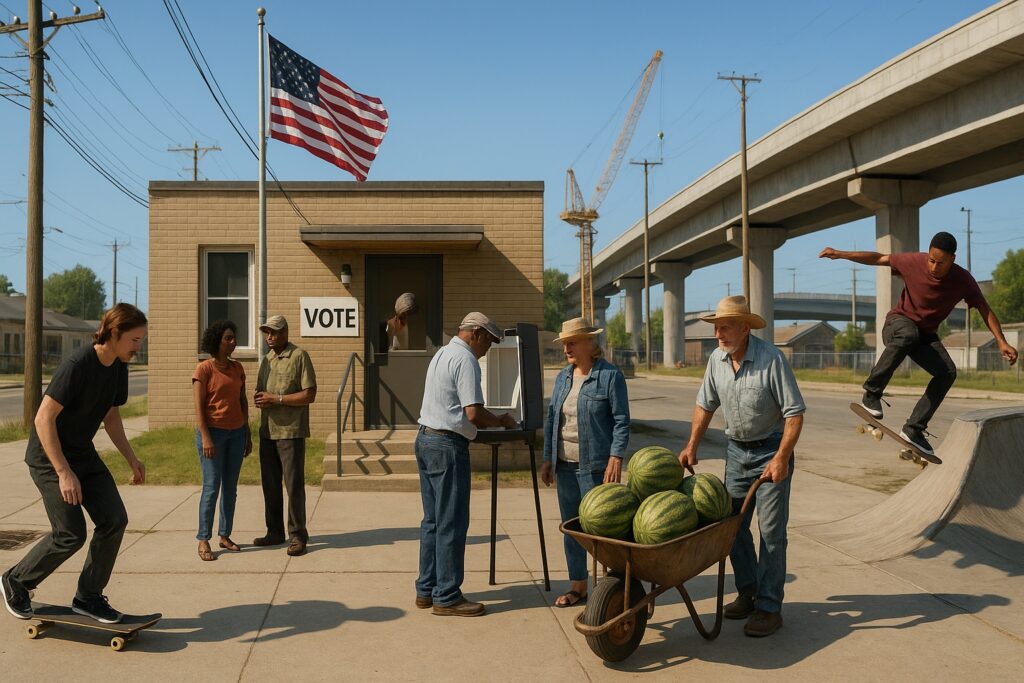
Skateboarding groups use DAO Ethyrioni to fund local ramps, contests, and travel grants. A local crew proposes a grant to build a mini-ramp. Members vote with melon tokens. The DAO locks funds in a multisig escrow until milestones clear. Builders submit photos and receipts. The DAO releases funds after the validators confirm milestones. This flow reduces friction and increases trust.
Melon tokens serve as access keys and reputation markers. Organizers stake melon tokens to post events. Voters earn melon tokens for attending meetings and for verified service. The DAO awards badges that link to on-chain reputation. Organizers with higher reputation receive lower bond requirements. The system lowers entry costs for new organizers while keeping accountability.
The DAO runs pilot trials at skateparks and festivals. Trials test payment flows, ticketing, and secondary markets for limited merchandise. Trials embed NFC tags in event passes to verify attendance claims. Data from trials feed back into governance proposals to refine token weights and payout rules. Trials also test legal wrappers, such as forming a non-profit node to handle local compliance.
Melon economics supports micro-economies. Vendors accept melon tokens for food and gear at events. The DAO partners with local shops to accept tokens via simple point-of-sale bridges. The DAO sets exchange windows to reduce volatility and to let vendors convert tokens to stable assets on demand.
The model scales to other communities. Teams can fork modules to suit music scenes, maker spaces, or local sport clubs. The design uses the same dao ethyrioni infrastructure voting skateboarding melons primitives: proposals, votes, treasuries, and tokens. Communities adapt the modules to local rules and legal needs. They still follow the same security and governance patterns to protect members and funds.