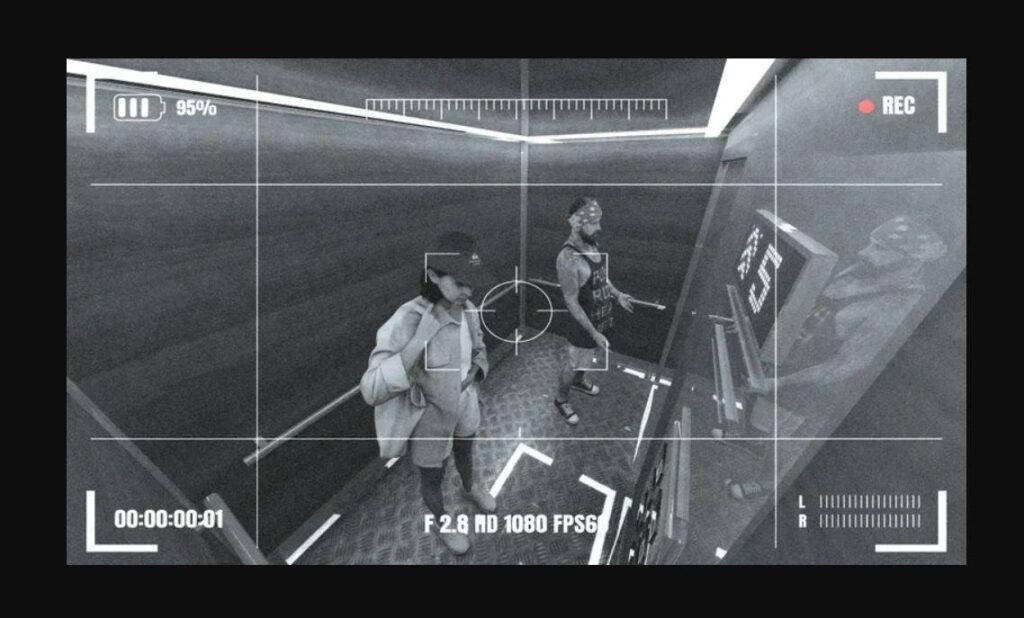
Video evidence has become routine in U.S. litigation. Retailers rely on CCTV in slip-and-fall cases. Logistics companies review warehouse footage after workplace incidents. Manufacturers preserve production-floor recordings during internal investigations. What used to be peripheral evidence is now often central.
But producing video in discovery creates a structural tension: the footage rarely contains only the parties to the case. It captures employees, customers, contractors, visitors, and vehicles – many of whom have nothing to do with the dispute. If that footage is produced without redaction, organizations risk unnecessary disclosure of third-party personal information.
In modern eDiscovery practice, redaction is not about hiding facts. It is about limiting exposure while preserving evidentiary value.
Why Video Production Is Different from Document Production?
Unlike documents, video captures everything within the frame. A single warehouse clip might include:
- Dozens of identifiable faces
- Vehicle license plates in loading areas
- Employee name badges
- Computer screens with internal data
- Time stamps and contextual details
Even when the litigation concerns a narrow incident – for example, whether a spill occurred before a fall – the recording often shows far more than what is legally relevant.
Federal Rule of Civil Procedure 26 emphasizes proportionality and protective measures. Producing video without limiting third-party exposure can trigger privacy objections, protective order disputes, or reputational harm. Courts increasingly expect parties to take reasonable steps to reduce collateral disclosure where feasible.
Redaction as Risk Management in U.S. Litigation
Redacting non-parties in video evidence is widely recognized as a practical safeguard. Blurring bystander faces and unrelated vehicle license plates does not alter the substantive event in most cases. Instead, it reduces the risk that sensitive personal information becomes part of the public court record or widely circulated among litigation teams.
This is especially relevant when:
- Footage may be filed with the court
- Opposing counsel includes multiple external vendors
- Insurance carriers or third-party experts are involved
- The case may attract media attention
In class actions and employment disputes, exposure of uninvolved individuals can escalate tensions and create additional claims unrelated to the original matter.
What to Blur – and What to Review Manually
In most litigation workflows, the first redaction layer focuses on two primary identifiers: faces and license plates. These are the most direct and commonly recognizable features in video evidence.
Automated face and plate blurring significantly reduces manual workload while preserving the core evidentiary sequence. However, litigation-grade review should also consider additional identifiers such as name badges, visible documents, or information displayed on screens. These elements are typically addressed through manual masking during quality control review.
The objective is not aesthetic perfection. It is defensible minimization: limiting exposure of individuals who are not relevant to the case while maintaining the integrity of the footage.
On-Premise Redaction for Litigation Control
Because litigation footage often involves sensitive workplace incidents, customer interactions, or operational disputes, many organizations prefer to process recordings locally rather than send them through cloud-based workflows. Keeping video inside the organization’s own environment reduces transfer risk, supports tighter access control, and makes chain-of-custody documentation easier to manage.
For teams that need file-based video anonymization software – Gallio PRO supports local processing of recorded footage and images with automatic blurring of faces and vehicle license plates. It does not blur full body silhouettes, and it is not built for real-time or live-stream anonymization. Its automatic detection scope is intentionally limited to faces and license plates, which helps keep the workflow focused and predictable.
Additional visual identifiers – such as company logos, tattoos, name badges, documents, or screen content – are not detected automatically. These can be covered manually in the built-in editor, which is useful in litigation workflows where most frames can be handled automatically, while edge cases still require human review.
Gallio PRO also does not collect logs containing face or license plate detection events, and it does not store logs containing personal or sensitive data. For organizations that want to reduce unnecessary metadata exposure during dispute handling or evidence preparation, that can be an important operational advantage.
If your legal or compliance team is evaluating a scalable redaction workflow, it makes sense to test the process on representative footage and compare processing speed, output consistency, and review effort before rolling it out more broadly.
Consistency Matters More Than Speed
In eDiscovery, one exposed frame can undermine an otherwise careful production. Motion blur, lighting shifts, and partial occlusions can cause temporary detection gaps if footage is not reviewed thoroughly.
Before producing video evidence, teams should validate:
- Stability of blurring across long sequences
- Edge frames at scene transitions
- Reflections in mirrors or glass surfaces
- Moments where subjects briefly turn away from the camera
Courts focus on reliability and proportionality. A structured redaction workflow demonstrates that the producing party took reasonable steps to protect third parties without interfering with evidentiary substance.
Strategic Advantages of Controlled Redaction
Beyond regulatory considerations, controlled video redaction supports broader litigation strategy. It can:
- Reduce motion practice over privacy disputes
- Limit unnecessary reputational exposure
- Support protective order negotiations
- Prevent secondary complaints from uninvolved employees or customers
In high-volume organizations – retail chains, distribution centers, transportation networks, healthcare facilities – scalable redaction is no longer optional. It is part of operational litigation readiness.
By integrating automated face and plate blurring with structured manual review, organizations can produce video evidence that remains probative, proportional, and professionally handled.
FAQ – eDiscovery Video Redaction
Is redaction required before producing CCTV footage in U.S. litigation?
There is no universal rule, but courts expect reasonable steps to limit unnecessary disclosure of third-party personal information where feasible.
Does blurring affect admissibility?
When redaction does not alter the material facts at issue, courts generally accept blurred footage, particularly when it protects non-parties.
Can redaction be performed in the cloud?
It can, but many organizations prefer on-premise processing to maintain control over sensitive litigation evidence and simplify chain-of-custody documentation.
Does Gallio PRO detect logos or badges automatically?
No. Automatic detection covers faces and license plates only. Other identifiers can be masked manually using the built-in editor.