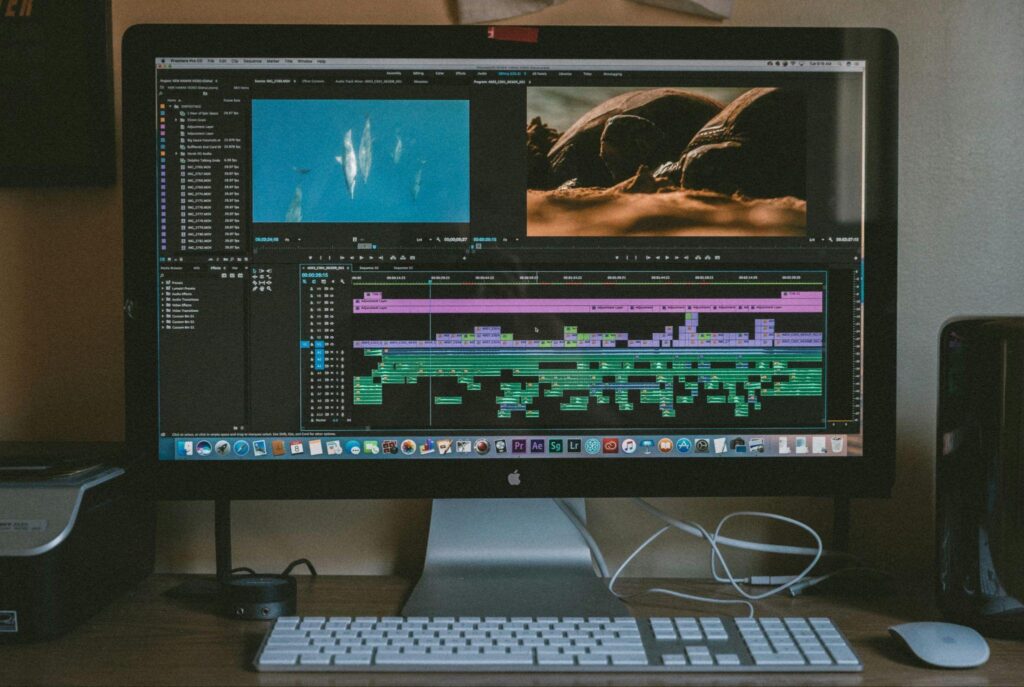
A founder I know spent four hundred dollars on his last product launch video. Not four thousand four hundred, and most of that went to a stock music license. Two years ago four hundred dollars wouldn’t have covered the camera operator’s day rate, let alone the rented space or the editor after. He skipped booking any of that. The whole trailer came out of an AI text-to-video generator he sat at his kitchen table typing out what each shot should look like instead of calling anyone.
He’s not unusual anymore. Scroll through the launch videos on any small crypto project’s page or an early-stage SaaS landing page right now, and there’s a decent chance what you’re watching came out of an AI text-to-video prompt rather than a camera. The tell used to be obvious warped hands, six fingers, backgrounds that melted if the camera moved too fast. That’s changing fast enough that the tell is starting to disappear for anything shorter than about ten seconds.
What actually shifted isn’t just quality, though quality helped. It’s that the cost structure flipped. A traditional explainer video scales with length and complexity more scenes, more locations, more cost, roughly linearly. Generated video scales with iteration instead. You can produce fifteen versions of a ten-second opening shot for less than one version of a filmed one, which changes how teams approach the whole process. Instead of storyboarding carefully and shooting once, founders are generating a dozen rough cuts, throwing out the ones that don’t land, and refining from there.
I sat in on a call last month with a two-person team building a trading tool who needed a sixty-second demo video for their launch page and had, by their own account, “a logo and forty bucks.” They ran the script through an AI text-to-video generator scene by scene, describing each shot — a dashboard rendering in slow motion, a hand tapping a phone screen, an abstract animation of coins moving through a network and assembled the output themselves in a free editor. The finished video wasn’t cinema-grade. It didn’t need to be. It needed to not look homemade, and it cleared that bar in an afternoon instead of the two weeks a freelance videographer had quoted them.
There’s a ceiling here worth naming honestly. Anything involving a specific human face doing a specific recognizable thing, your actual founder talking directly to camera, a real product being physically handled still tends to land better filmed, or at least filmed and then enhanced rather than generated from nothing. The tools that generate convincing motion from a text prompt are strongest with abstract or environmental shots: data visualizations, product renders, establishing scenes, transitions between ideas. Ask an AI text-to-video model for “a person confidently explaining a complex financial concept” and you’ll get something that’s almost right in a way that’s harder to fix than starting over.
The teams getting the most out of this aren’t treating it as a replacement for every kind of footage. They’re treating an AI text-to-video generator as a way to fill in everything that isn’t the one shot that actually needs a human in it. Film the founder talking for fifteen seconds if the message needs a real face behind it, then build the surrounding ten scenes — the b-roll, the transitions, the abstract visualization of “growth” that every fintech video seems to need — without booking a second shoot day for footage nobody’s going to remember anyway.
None of this means the four-hundred-dollar launch video is going to out-produce a studio budget on a Super Bowl spot.