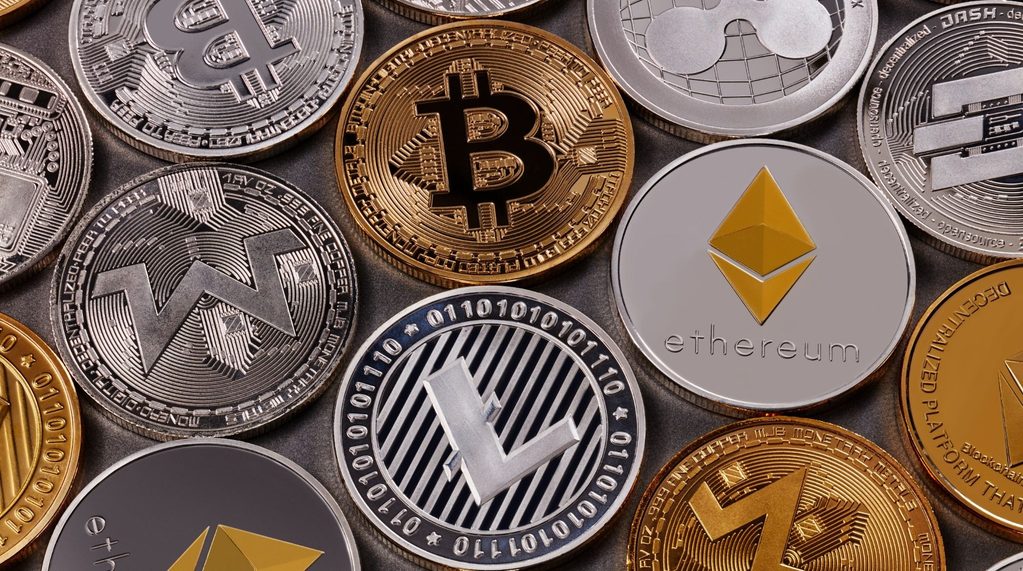
Charlie Lee released Litecoin on 7 October 2011 as a fork of Bitcoin with four parameters changed. Fifteen years later it is still here, still in the top tier by liquidity, and almost never discussed as an investment thesis.
That is not failure. The parameters chosen in 2011 happened to be exactly right for something Bitcoin turned out to be bad at, and nothing has displaced Litecoin in that niche since. The “silver to Bitcoin’s gold” framing was always marketing. What actually happened is more interesting and considerably more technical.
Two Confirmations, Five Minutes
Everything follows from the block time, and the arithmetic is worth doing properly.
Litecoin targets a 2.5-minute block against Bitcoin’s ten. That is not a marginal improvement, it is a category difference, because merchant finality is measured in confirmations rather than in blocks.
Most merchants treat two Litecoin confirmations, roughly five minutes, as sufficient to consider a payment settled. The equivalent comfort level on Bitcoin is around an hour. Payment processors report median confirmation times of 12 to 18 minutes for Litecoin under normal conditions against 45 to 75 minutes for Bitcoin, and during the 2021 congestion peak Bitcoin transactions at standard fee rates averaged over 120 minutes while Litecoin stayed under 30.
Five minutes is a wait. An hour is an abandoned transaction.
The clearest demonstration of what that difference is worth comes from categories where deposit speed is the product rather than a detail. Online casinos standardised on Litecoin early and heavily for precisely this arithmetic, and comparisons aimed at understanding Litecoin casinos rank operators substantially on how fast deposits credit and withdrawals clear. Those are questions about the chain at least as much as about the operator, which is why the coin choice ended up mattering commercially.
Fees Stayed Negligible Because Nothing Forced Them Up
The second reason is less about design and more about demand never catching up with capacity.
Litecoin fees have historically sat under five cents. Not because of a clever fee mechanism, but because four times the block frequency against a fraction of the transaction volume means the fee auction rarely has anything to auction. Block space has been abundant for the network’s entire history.
Bitcoin’s fee market works exactly as designed and produces exactly the outcome you would expect when demand exceeds supply. That is a feature for a settlement network and a disqualification for a payments one. Nobody moves fifty dollars across a chain where the fee might be eight.
The distinction matters more than the absolute numbers. A network with permanently abundant block space has predictable costs. A network with contested block space has a fee market, and a fee market is a thing you have to think about before every transaction.
Scrypt Failed at Its Stated Goal and Produced Something Better
This is the part that gets told wrong in most Litecoin explainers.
Scrypt was chosen as the proof-of-work algorithm because it is memory-hard and was expected to resist ASIC development, keeping mining accessible to ordinary hardware. That failed. Scrypt ASICs arrived by 2014, and today Litecoin mining is as ASIC-dominated as Bitcoin’s, with over 80% of hashrate concentrated among a handful of pools.
But the failure produced an unintended structural advantage. Scrypt and SHA-256 ASICs are not interchangeable. Hardware built for one network cannot mine the other, which means Litecoin’s security does not compete with Bitcoin’s for the same machines.
And it enabled merged mining. Since 2014, Dogecoin has been merge-mined with Litecoin under AuxPoW, so the same Scrypt hardware secures both chains simultaneously at no additional energy cost. That arrangement began because of concerns about Dogecoin’s security, and it has since worked in the other direction too. Dogecoin block rewards are part of why Litecoin’s hashrate has climbed steadily, now exceeding 1,000 TH/s.
Two networks, one energy budget, both more secure than either would be alone. Documented across the Litecoin project materials and visible in the hashrate data.
It Was Bitcoin’s Testnet, and That Is Not an Insult
The historical role most coverage skips.
SegWit activated on Litecoin in May 2017. It activated on Bitcoin in August 2017. Litecoin demonstrated the upgrade working on a live network carrying real value, months before the larger chain committed to it.
The first cross-chain Lightning Network transaction was completed in May 2017, routing LTC to BTC. Bitcoin’s Lightning ecosystem did not gain real traction until 2018 and 2019.
Then MimbleWimble Extension Blocks arrived on Litecoin’s base layer in May 2022 via soft fork, adding optional confidential transactions. Worth reading alongside the LTC to XMR exchange guide, since MWEB changes the calculus for anyone who was swapping chains purely for that property.
A network small enough to move quickly and large enough for the results to mean something is a genuinely useful thing for an ecosystem to have. Litecoin has been that for a decade.
The Supply Picture
Briefly, because it is the least interesting part and gets the most attention.
84 million cap, four times Bitcoin’s 21 million, with halvings every 840,000 blocks. The reward went from 50 LTC at launch to 25 in 2015, 12.5 in 2019, and 6.25 in August 2023. The next halving lands in July 2027, taking it to 3.125.
Around 90.8% of the total supply has been mined. Annual inflation sits near 1.80% and drops to roughly 0.90% after 2027. Difficulty retargets every 2,016 blocks, about every three and a half days.
None of which explains why anyone uses it. The supply schedule is a copy of Bitcoin’s with the numbers multiplied, and it was never the differentiator.
What Actually Kept It Alive
Litecoin survived because it solved a problem rather than because it promised one.
The 2.5-minute block was a small change made for defensible reasons in 2011, and it turned out to be the difference between a chain people move money on and a chain people hold. Everything else, the fee predictability, the merged-mining security, the willingness to ship upgrades first, follows from being a working payments network rather than a contested store of value.
Fifteen years is a long time in this sector, and most projects launched alongside it are gone. The ones still here mostly do something specific. Anyone tracking trading narratives will notice how rarely Litecoin features in them, which is arguably the point. It is infrastructure, and infrastructure is boring when it works.